
Apprenticeships in Scotland set to fall sharply as new research reveals one in three employers plan to stop recruiting
EDINBURGH, SCOTLAND / AGILITYPR.NEWS / December 16, 2025 / Warning comes as England launches major new apprenticeship funding package, raising fears Scotland may fall further behind on support for employers and young people
Scotland is facing a significant decline in apprenticeship recruitment as a new report from the SNIPEF, the Plumbing and Heating Federation, reveals that one in three employers do not intend to recruit an apprentice over the next three years. The projected decline marks a clear break from historic recruitment patterns and raises serious concerns about whether Scotland will have the skilled workforce required to meet future public safety and decarbonisation demands.
The findings, published in SNIPEF’s new Apprenticeships Under Pressure report, draw on the views of employers across Scotland’s plumbing and heating profession and show that while employers remain committed to high training standards, rising costs and financial pressures are making apprenticeship recruitment increasingly unaffordable. The top barriers identified are limited funding support (67%), high wage costs (65%), and the cost of workplace supervision (47%).
Employers are also clear about where the problem lies. More than three quarters (77%) rate current Scottish Government support as poor or inadequate, and almost all (93%) say increased funding is the single change needed to make recruitment viable. A majority (62%) also believe costs should be shared equally between employers and government, reflecting the balance that previously helped sustain training across the profession.
Fiona Hodgson, Chief Executive of SNIPEF, said: “Plumbing and heating employers have a long history of supporting apprenticeships. Many of today’s business owners came through the system themselves and know the value it brings to young people, to the profession and to Scotland’s wider economy. But they are being asked to carry more and more of the burden while government support has not kept pace with the reality on the ground.
“We cannot expect employers to absorb these pressures indefinitely. When the financial risk becomes too high, fewer businesses take on apprentices, and it is young people who lose out. Scotland cannot afford to close off one of the most effective routes into skilled work, good careers and genuine social mobility.”
England expands apprenticeship funding as Scotland faces growing pressure to keep pace
The publication of SNIPEF’s research comes as the UK Government announces 50,000 new apprenticeship places in England, backed by a £725 million reform package that will remove the 5% co-investment cost for small and medium-sized employers training under-25 apprentices. These measures apply only in England, where technical apprenticeships already attract significantly higher funding, in some cases more than double Scotland’s contribution, in contrast to Scotland’s college contribution rates, which have been frozen for almost a decade.
In addition, employers in England can draw on unused Apprenticeship Levy funds to help cover training costs, giving them practical and visible routes to support apprenticeship places. By contrast, Scottish employers cannot access levy receipts in this way and have no clear transparency over how levy income allocated to Scotland is used.
Commenting on the growing contrast in approach, Fiona Hodgson said: “The UK government has sent a clear signal that apprenticeships are a national priority, with reforms designed to help employers pay less towards training, carry less risk and access more visible support.
“In Scotland, employers already rely on government to fund college training, but they have no direct access to unused levy funds and no equivalent mechanisms to channel surplus contributions directly into front-line apprenticeship places.
“If Scotland does not match this clarity and ambition, there is a real risk that our businesses will feel less supported and that young people here will see fewer visible opportunities than their peers elsewhere in the UK.”
Other findings from the report
- Employers overwhelmingly support the current four-year apprenticeship as the gold-standard route into a safety-critical profession, with more than 80% stating it remains essential for producing competent, job-ready tradespeople.
- Two-thirds of member businesses (67%) currently employ apprentices, demonstrating that the profession continues to invest heavily in skills despite mounting financial pressures.
- Both smaller firms and larger employers report similar motivations for taking on apprentices and identify many of the same pressures, showing that challenges are system-wide rather than isolated.
- Employers are open to enhanced entry routes that strengthen job readiness with 45% supporting a college-first or pre-apprenticeship pathway to help spread early-stage costs and improve candidate preparation.
- 82% of employers strongly favour 16–19-year-olds as the primary entry point, reflecting a longstanding commitment to creating meaningful opportunities for school leavers and supporting social mobility.
Ends
"If Scotland does not match the ambition being shown elsewhere, we risk closing off one of the most effective routes into skilled work." Fiona Hodgson, Chief Executive, SNIPEF
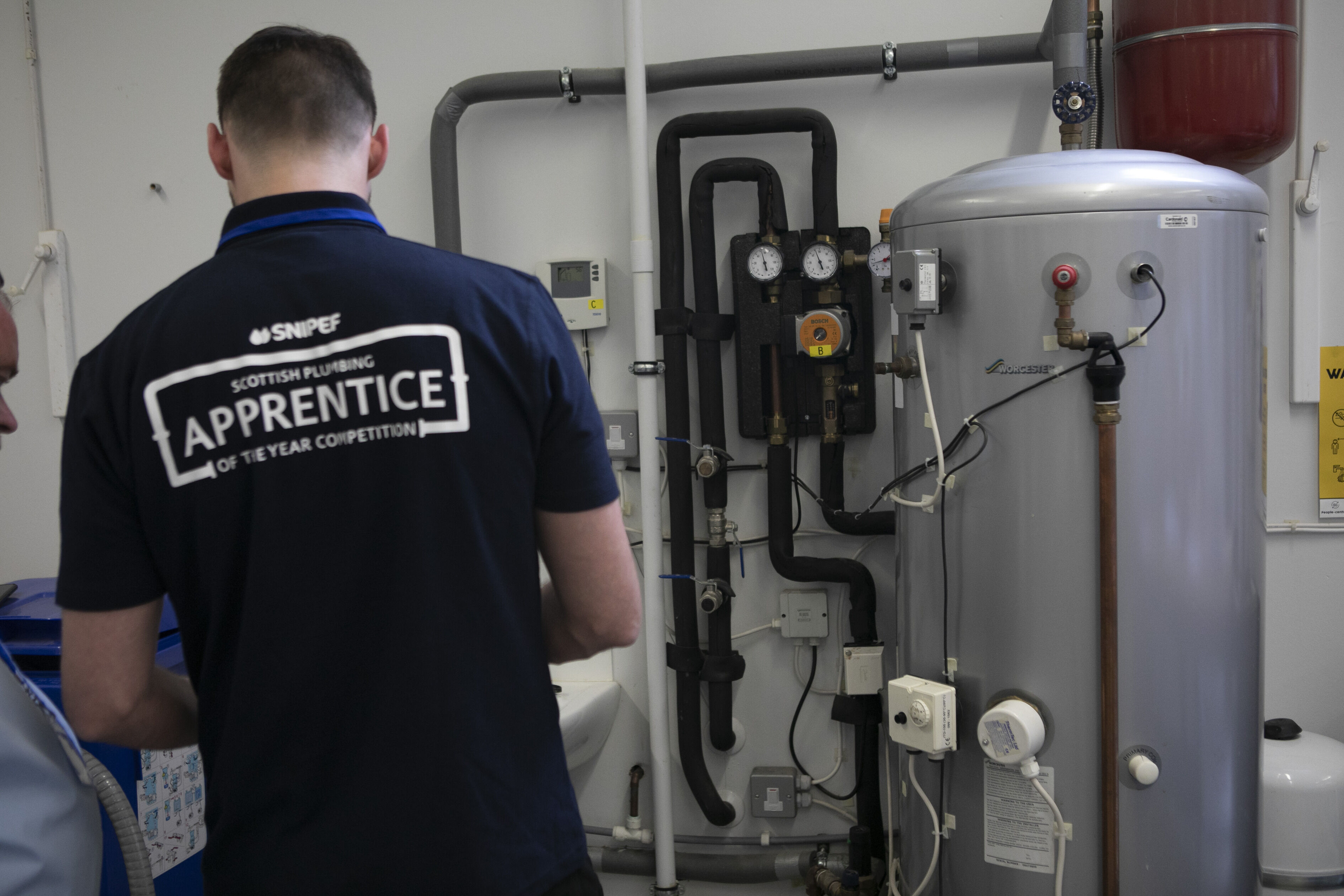
Apprentices entering Scotland’s plumbing and heating profession face growing uncertainty as employers struggle with rising training costs . One in three employers say they do not plan to recruit an apprentice over the next three years.
77% of employers rate current Scottish Government support for apprenticeships as poor or inadequate.

"If Scotland does not match the ambition being shown elsewhere, we risk closing off one of the most effective routes into skilled work." Fiona Hodgson, Chief Executive, SNIPEF

Apprentices entering Scotland’s plumbing and heating profession face growing uncertainty as employers struggle with rising training costs . One in three employers say they do not plan to recruit an apprentice over the next three years.
77% of employers rate current Scottish Government support for apprenticeships as poor or inadequate.
About SNIPEF
The Scottish and Northern Ireland Plumbing Employers’ Federation (SNIPEF) is the leading representative body for the plumbing and heating profession across Scotland and Northern Ireland. Its 700 member businesses employ more than 3,000 professional operatives and over 10,000 employees in total, supported by a network of more than 60 supply-chain affiliates.
SNIPEF advocates for high standards, safe practice and a skilled workforce. It works closely with government, colleges and industry partners to influence policy, strengthen professional competence and support the long-term resilience of the sector. Through SNIPEF Training Services, the Federation manages the Scottish plumbing and heating apprenticeship programme, supporting more than 1,000 apprentices at any one time.
About the report
Apprenticeships Under Pressure is the first in a series of SNIPEF research reports examining the sustainability of Scotland’s apprenticeship system. Based on the views of 188 employers from across the plumbing and heating profession, the study provides a detailed, statistically robust insight into the barriers, motivations and support needs shaping apprenticeship recruitment. The findings will inform SNIPEF’s ongoing campaign for a fair, accessible and well-funded apprenticeship system aligned with Scotland’s wider workforce, housing and net-zero priorities. A copy of the report can be downloaded at www.snipef.org/publications
Contacts