Hydrogen on Demand Technology Offers New Energy Security Option as Europe Faces Winter Gas Pressure
ABU DHABI, UAE / AGILITYPR.NEWS / July 30, 2026 / Kinetic7 Clean Gas Technology Could Support Energy Resilience for Commercial, Off-grid and Emergency Use
A clean-energy technology company headquartered in Abu Dhabi says hydrogen gas produced on demand, at the point of use, could help strengthen energy security as Europe and the UK face renewed concerns over gas storage, supply resilience and winter prices.
Gas storage across Europe has fallen to historically low levels for late July, raising fears that the region could enter the winter with reserves well below the five-year average. The pressure has intensified scrutiny of gas supply routes, LNG competition and the UK’s limited storage capacity, making energy security a renewed priority for policymakers, industry and households.
Australian technology entrepreneur and philanthropist Rick Parish believes hydrogen-on-demand systems can play a major role in future-proofing clean gas supplies, reducing reliance on stored or transported fuel and improving resilience for communities and businesses exposed to volatile energy markets.
Parish, the founder of Kinetic7 Technologies, a deep-tech company headquartered in Abu Dhabi with offices in Australia, the US and Europe, has developed proprietary technology to create hydrogen gas on demand at the point of use. Conventional hydrogen production can require large-scale investment, extensive infrastructure and storage, whilst hydrogen stored under pressure requires careful handling. Kinetic7’s technology is designed to remove much of that cost and infrastructure by producing hydrogen only when it is needed.
Originally conceived for humanitarian use in developing and Commonwealth nations, as well as for disaster management and resilience, the company has developed two portable cooking stoves, Nomad™ and Tribe™, which can be rapidly deployed into disaster zones when critical infrastructure and power supplies are disrupted. The portable stoves use water and electrolysis to create hydrogen gas on demand. They require only a small amount of electricity and can be powered by solar panels, a small onboard battery or a mains connection.
The company has now adapted its portable technology into a commercial unit, HODBox™ (Hydrogen On Demand Box), which can be used by restaurants, hotels and large-scale catering operations to provide clean gas for cooking. Kinetic7 says the hydrogen produced on demand can be delivered at a fraction of the cost of current natural gas supplies, making the technology a potentially attractive proposition for hospitality and catering businesses hit by rising energy costs.
Parish’s company is also working on a prototype for the residential market, which it believes could be a significant development for domestic energy supply. Kinetic7 intends to target off-grid households first, following a similar model to the way Elon Musk’s Starlink service was initially positioned for users not connected to mainstream broadband and telephony providers.
Across the UK and Europe, millions of rural and off-grid households remain dependent on heating oil, LPG, biomass, solid fuels or electricity for heat, hot water and cooking. In the UK alone, off-gas-grid homes rely on alternatives such as electricity, heating oil and LPG, while EU households continue to use natural gas as a major source of residential energy.
The residential HODBox™ would be attached to the side of a property and connected to solar panels and/or the mains supply. Because the unit uses only small amounts of electricity, Kinetic7 says it could provide households with clean gas for hot water, ambient heating and cooking while reducing reliance on stored fossil fuels and making a positive impact on carbon reduction.
Rick Parish, founder and Chairman of Kinetic7 Technologies, said: “Europe’s current gas challenge shows why energy resilience can no longer depend solely on centralised infrastructure, imported fuel and large-scale storage. Hydrogen produced at the point of use gives governments, businesses and households another route to clean, secure and deployable energy.”
Parish’s mission was shaped by personal tragedy and humanitarian work. Following the death of his four-year-old son, Elliot, from brain cancer, Parish says his work in Africa showed him how many families still cook on primitive wood-burning stoves, exposing women and children to household air pollution. Each year, household air pollution directly causes 3.2 million premature deaths due to continued reliance on wood-burning stoves and other polluting fuels, which also contributes to deforestation and climate impact.
Parish added: “Energy security is now being shaped by multiple pressures at once: geopolitics, conflict and uncertainty around strategic supply routes such as the Strait of Hormuz, ageing infrastructure, limited storage, competition for LNG, extreme weather, rising demand and the challenge of integrating more renewable power into national grids. No single technology can solve those pressures alone, but decentralised hydrogen-on-demand can form part of a broader resilience strategy by creating clean gas where and when it is needed, rather than relying entirely on long supply chains and large centralised storage.”
Security analysts increasingly warn that energy supply is also exposed to so-called “grey zone” threats: hostile activity that falls below the threshold of conventional war but can still damage nation states through cyberattacks, sabotage, disinformation, surveillance and disruption to critical infrastructure. For governments, that makes resilience not only an economic or environmental challenge, but a national-security priority.

Rick Parish Entrepreneur & Philanthropist - Founder & Chairman of Kinetic 7 Technologies
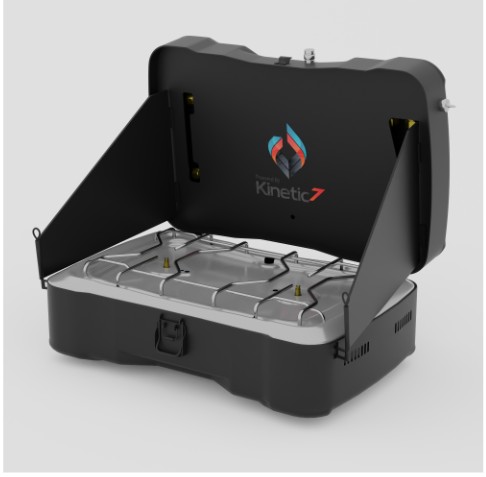
The Portable Nomad™️ cooking stove for federal disaster management and emergency use.
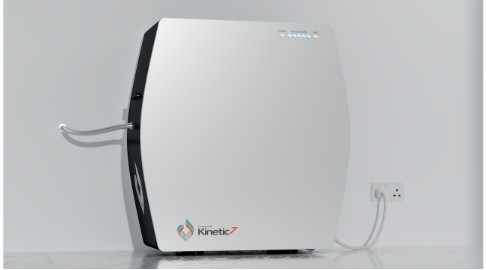
Design Prototype of what a residential Kinetic7 HODBox™️ might look like for domestic clean gas supply.
About Us
Rick Parish is available for media interviews.
To learn more about Kinetic7, visit www.kinetic7.com
About Rick Parish
Rick Parish is an Australian entrepreneur, philanthropist and founder of Kinetic7 Technologies, a deep-tech clean-energy company developing hydrogen-on-demand™ technology using water, solar power and battery technology. A former Australian SASR operator and founder of the Marine & Offshore Group, Parish has spent more than 30 years building international businesses across energy, safety, security and training in the oil and gas industries, as well as disruptive technology.
Motivated by humanitarian work and the loss of his son Elliot to childhood cancer, Parish is focused on practical clean-energy solutions for disaster relief, developing nations and communities vulnerable to energy disruption. His latest innovations include Kinetic7’s Nomad™ and Tribe™ portable stoves and the HODBox™ hydrogen-on-demand unit for commercial, off-grid and emergency energy use.
Kinetic7
Kinetic7 is a deep-tech company founded by Australian entrepreneur and philanthropist Rick Parish. Headquartered in Abu Dhabi, UAE, with entities in the UK, Australia, Italy and the US, Kinetic7 has pioneered patented and patent-pending clean-energy technology to produce hydrogen gas on demand for humanitarian, environmental and disaster-management use in developing and developed nations.
The Tribe™ Stove
The Tribe™ stove is one of Kinetic7’s first portable stove innovations, developed following a six-year, $18 million research and development programme and now moving towards commercialisation. Designed for humanitarian use in developing nations, Tribe™ provides a cleaner alternative to woodburning, LPG and kerosene stoves for cooking and heating. Using Kinetic7’s hydrogen-on-demand technology, Tribe™ produces no carbon emissions at the point of use and is intended to help reduce household air pollution, deforestation and climate impact while improving quality of life for local communities.
The Nomad™ Stove
The Nomad™ stove has been designed for rapid portable deployment into disaster zones for disaster relief, humanitarian, military and emergency-services use. Using a small amount of water and a small solar-powered battery, it creates hydrogen gas on demand for cooking and heating with no carbon emissions at the point of use. In disaster-prone countries and regions, Nomad™ could support evacuation centres, emergency response teams and communities temporarily cut off from utilities and supply chains.
Contacts
Gerard Franklin
Spokesman for Rick Parish
gf@i5media.co.ukPhone: (44) 07791 039636 Mobile: 07791 039636