MeoWoff Flags Growing Summer Risk for Pets as Temperatures Climb
UNITED KINGDOM / AGILITYPR.NEWS / June 02, 2026 / With months of fierce summer heat well on their way, cat placement and care service MeoWoff is warning pet owners to keep an eye on their pets - and on the telltale signs that conditions at home are becoming uncomfortable, so that they can take notice of small changes before they turn into something more serious.
It may not seem like much at first: a pet lying longer than usual on a cool patch of floor. Less interest in food, water bowls emptied faster than expected or sometimes not touched at all. Warm rooms, closed windows, afternoon sun coming through glass - none of it looks extreme on its own. But together it can push indoor temperatures up enough to affect how animals behave and feel.
Cats in particular don’t usually signal distress in obvious ways. They withdraw instead, moving less and sleeping in unusual spots. The same pattern can appear in dogs and other household pets, especially during longer heatwaves where homes don’t cool down properly overnight.
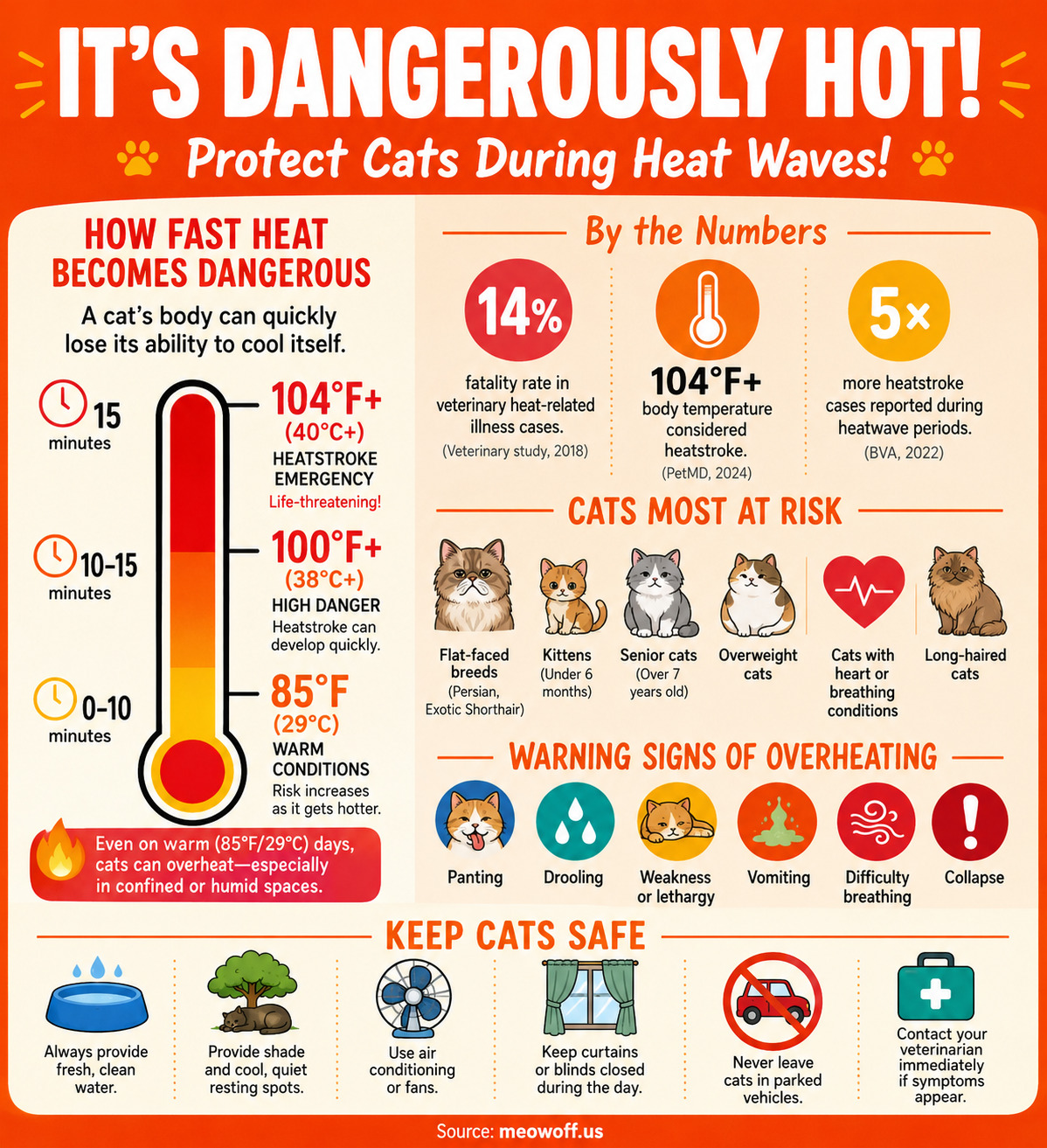
Simple changes in routine - such as keeping water available in more than one place around the home, closing blinds earlier in the day, paying attention to rooms that trap heat rather than circulate air, and avoiding active play during the hottest hours - can make a huge difference.
Iryna Smyrnova, Veterinarian (DVM) at MeoWoff, said early signs are often subtle enough to blend into normal behavior.
“Most of the time it doesn’t look like an emergency at first,” Smyrnova said. “A cat might just seem quieter, or less interested in food, or spend more time away from people. The problem is those signs are easy to overlook. In hot weather, that delay can have serious consequences.
“Pets do not always regulate hydration well during prolonged heat, and some will continue eating and moving less even when they are already starting to struggle with temperature. Cooling mats, shaded areas, airflow between rooms, and regular fresh water can all help reducing risk.”
When heat stress progresses, symptoms can escalate quickly. Owners are advised to look out for excessive panting, drooling, vomiting, rapid breathing, weakness, collapse, or confusion. In cats, open-mouth breathing is particularly concerning and should be treated as urgent.
“If any of these signs appear, immediate veterinary attention is necessary,” said Iryna Smyrnova. “Delays can quickly worsen outcomes, especially during sustained high temperatures.
“Time is of the essence and knowing what signs to look out for will help owners to take action before the situations can reach that critical point.”
For more information about MeoWoof, visit meowoff.us.
Contacts
Dakota Digital
socialmedia@dakotadigital.co.uk