Sumeru AI Ships Geometry-First AI as a Business, Not a Research Demo
UNITED KINGDOM / AGILITYPR.NEWS / April 27, 2026 / The world model race needs a foundation. Sumeru AI has poured the concrete.
OpenAI shut down Sora’s web and app experiences on April 26, 2026, after media and analyst estimates placed its peak compute burn as high as $15 million per day against roughly $2.1 million in tracked revenue.
The market just delivered its verdict on whether flat video can be the foundation for world models.
It cannot.
The Structural Problem Video Cannot Fix
Sora's shutdown exposed why video fails as spatial AI infrastructure: every frame demands fresh inference, then disappears. A 3D asset is permanent—generate once, re-render infinitely. Even if the end goal is video, the optimal path is to generate the 3D asset first, then render. Sora skipped that step entirely. Not a product failure. A structural dead end.
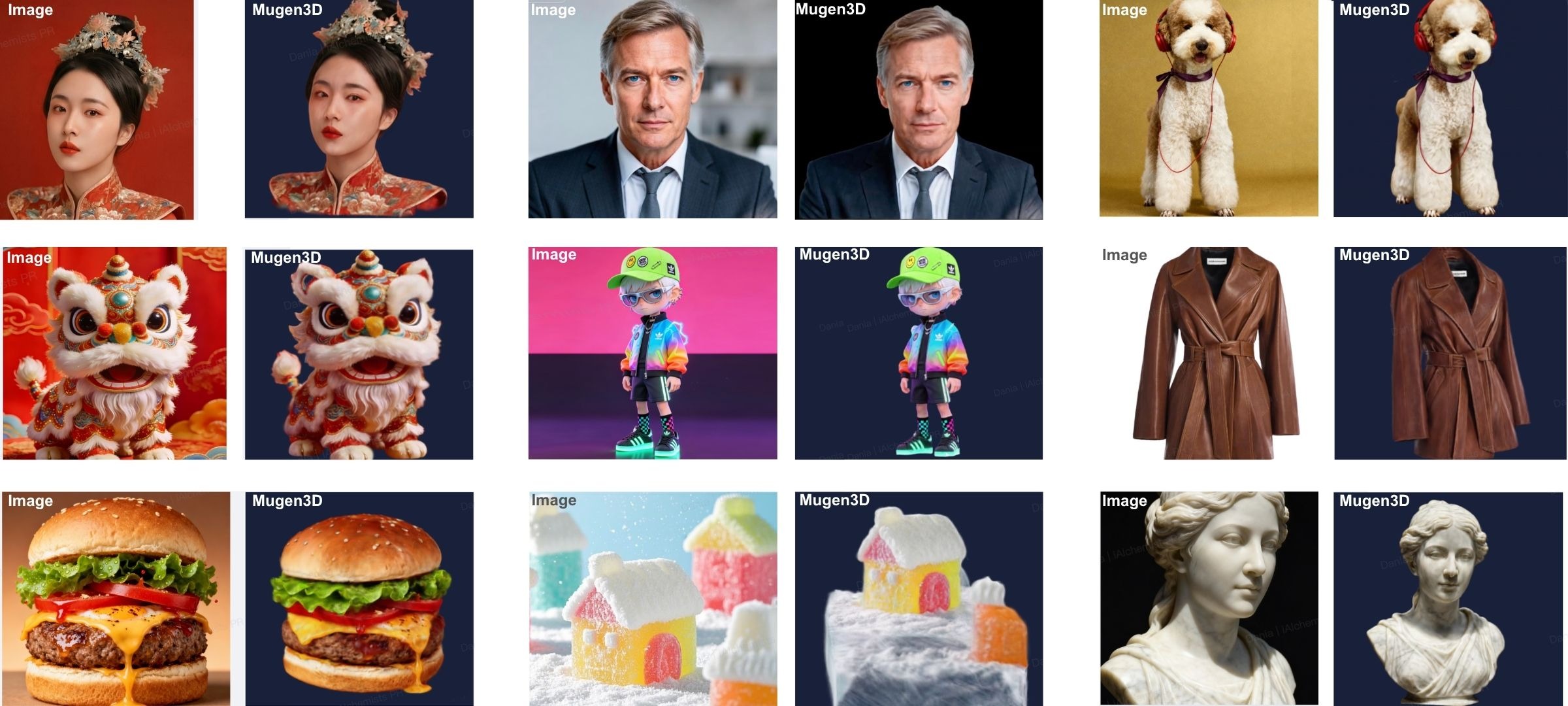
While OpenAI generated pixels, Sumeru AI generated geometry. Mugen3D outputs depth, scale, reflectance and collision bounds—what robots, simulations and spatial platforms actually need. Video generates illusions. Mugen3D generates navigable reality.
The Capital Contrast
World Labs has raised over $1 billion pursuing spatial intelligence at a reported $5 billion valuation. Microsoft's Trellis requires A100 or H100 enterprise GPUs and remains best understood as a research/open-source 3D generation model.
Sumeru AI reached production across more than 10 institutions on a ten-million-yuan angel round (~$1.46M USD), with live interaction running on a smartphone.
Less capital. More compute efficiency. Already in classrooms.
The Economics That Make It Real
Training: Eight consumer RTX 5090s versus the enterprise GPU clusters Microsoft and comparable 3D companies require.
Generation: One RTX 5090 per model. Roughly 1/100th the cost of video-based approaches of equivalent visual quality. Same output. Fraction of the cost.
Interaction: Where video platforms incur continuous generation cost for every frame of output, a Mugen3D asset is generated once and runs indefinitely at zero marginal cost. No regeneration. No ongoing server fees.
Free for individual users. Enterprise clients priced per project.
The Numbers That Rewrote the Rulebook
- True 1:1 reconstruction in a single pass—the only platform that exactly replicates the source image in 3D
- One image to full HD 3D animation—stable, view-consistent from every angle
- 150ms inference latency—fast enough for live conversation
- Unified pipeline—humans, objects and scenes generated simultaneously
- Physics-aware exports—ready for robotics, spatial computing and simulation platforms
Real-World Deployment
More than 10 universities already using the platform include Beijing Institute of Technology, Shanghai Jiao Tong University, Shenzhen University, and Hong Kong University of Science and Technology. Nearly 1,000 educators and tens of thousands of students are using it daily.
The same platform powers digital humans across psychological counseling, professional training, and other verticals. One infrastructure, multiple applications, each paired with a domain-specific language model.
Fei-Fei Li's World Labs and Microsoft's Trellis command the headlines. Sumeru AI has already moved geometry-first AI into daily production environments.
Built by Physicists, Not Pivots
Dr. Cheng Feng, CEO — physicist PhD, University of Leicester, built a computer vision company to a 1.5 billion RMB valuation.
Dr. Tomohiro Nagasaka, CTO — Mathematics PhD, Kyoto University. International Mathematical Olympiad medalist. Built China's first optical motion capture system.
Six and a half years of R&D before the world model conversation even started.
The Answer Was Never Video
Sora's shutdown is a market verdict, not a product story. The industry is pivoting to geometry. Sumeru AI is the only platform combining highest-fidelity 3D reconstruction with the lowest total cost structure, making geometry-first AI a viable business at scale.
World Labs has $1 billion. Sumeru AI has a product, paying enterprise clients and nearly 1,000 educators using it daily.
That is not a research paper. That is a business.
And geometry, unlike a hallucination, does not shut down on April 26th.
Dr. Cheng Feng is available for interviews. Comparative demo and media assets available on request.
Test it free at sumeruai.us/mugen3d
Contacts
Dakota Digital
socialmedia@dakotadigital.co.uk